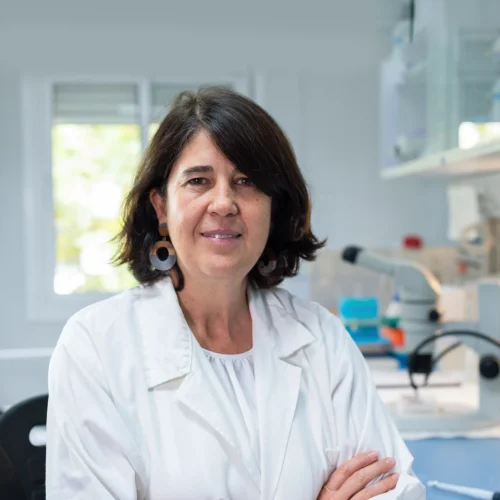
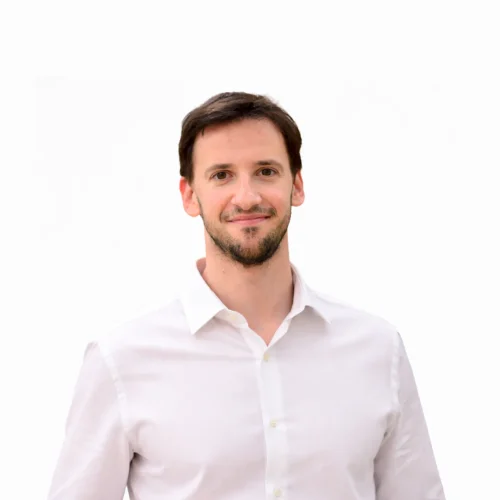
She dedicated her graduate training at the Université Catholique de Louvain in her native country, Belgium, and postgraduate training at the University of Texas MD Anderson Cancer Center (Houston, Texas) to acquiring research expertise and contributing to breakthroughs in this field.
In 2001, she set up her own laboratory at the Cleveland Clinic Lerner Research Institute (Cleveland, Ohio), where she climbed all the Faculty ranks from Assistant to Full Professor, and in 2018, she and her team relocated to the Children’s Hospital of Philadelphia and University of Pennsylvania (Philadelphia, Pennsylvania).
Dr. Lefebvre crafted her laboratory niche based on new research directions that her postdoctoral work helped open with the discovery of master roles for the protein SOX9 in defining cartilage cells. Quickly, her team showed that SOX9 is critically helped by SOX5 and SOX6, and broadened its investigations, often in collaboration with investigators worldwide, to the roles of these and other SOX family members in such biological processes as neurogenesis, skeletogenesis, and erythropoiesis. Their findings contributed to build the current dogma that altogether the twenty SOX factors are master determinants of almost every cell type.
Current projects in the Lefebvre laboratory continue to define the importance of SOX factors from development to adulthood, seek to elucidate mechanisms whereby variants in SOX genes cause diseases (SOXopathies), and aim to develop gene therapies for some of these diseases.
For instance, one project focuses on the Lamb-Shaffer neurodevelopmental syndrome, due to SOX5 variants, and another on the TOLCAS neurodevelopmental syndrome that the Lefebvre team, in collaboration with others, found to be due to SOX6 variants. Dr. Lefebvre has received multiple honors and awards for her research contributions and has always been an active member of the scientific community, namely as a reviewer or editor for various journals, member of NIH and other study sections, and speaker or organizer of international conferences.
Above all, she enjoys collaborating with researchers locally and worldwide, training the next generations of researchers, and helping families with children affected by SOXopathies.